Hospital FTE Leakage: Reclaiming the Invisible Budget
In the current healthcare landscape, administrators are facing a perfect storm of financial volatility, acute labor shortages, and an exhausted workforce. With labor costs typically accounting for over 50% of a hospital’s total operating expenses, workforce management has become the primary lever for fiscal sustainability.
However, many organisations are suffering from a hidden financial drain that manual spreadsheets and legacy systems simply cannot detect: FTE Leakage.
For large-scale health systems like Hackensack Meridian Health (HMH), addressing this “invisible” drain has become a cornerstone of their digital transformation, resulting in over $600,000 in savings in under a year.
This article explores the mechanisms of FTE leakage, the hidden costs of fragmented data, and the predictive strategies necessary to reclaim these lost resources.
Defining Hospital FTE Leakage: The Hidden Inefficiency
Full-Time Equivalent (FTE) Leakage is defined as the gap between an employee’s contracted hours and the hours they actually work.
In a clinical setting, this occurs when salaried or contracted staff are not scheduled for their full committed hours, even while the hospital is simultaneously paying for expensive agency labor or internal overtime incentives to cover perceived gaps on the same unit.
This phenomenon represents a massive, often undetected financial loss.
When managers focus solely on “filling holes” in a schedule rather than “resource optimisation,” they inadvertently allow core staff hours to go unused while relying on high-cost, last-minute solutions.
For a network of 17 hospitals like HMH, even a small percentage of leakage across thousands of team members creates a multi-million-pound deficit.
The Hidden Costs of Disparate Data and IT Fragmentation in Hospitals
One of the primary drivers of FTE leakage is the proliferation of disparate IT systems.
Research indicates that approximately 60% of health systems use between 50 and 500 different software solutions for operations alone.
This fragmentation creates significant barriers to efficiency:
Data Silos
When information regarding staff availability is disconnected from real-time patient demand, managers cannot see that they have under-utilised core staff.
Administrative Burden
88% of CIOs agree that working with disparate systems complicates their jobs. This “technical noise” forces nurse managers to spend hours on manual data entry rather than clinical oversight.
Compliance Risks
Fragmented systems make it difficult to track union regulations, mandatory rest periods, and license expirations, leading to costly violations.
Without a single source of truth, FTE leakage remains invisible, masked by the sheer complexity of managing 24/7 rotating shifts across multiple facilities.
Eliminating FTE Leakage with Predictive Staffing Dashboards
The solution to reclaiming the invisible budget lies in the transition from reactive “firefighting” to proactive resource management.
By utilising advanced analytics platforms like Smart Square, administrators can move beyond static digital calendars and embrace a predictive logic that synchronises the workforce with anticipated patient volumes.
The 120-Day Forecasting Horizon
The most effective way to prevent leakage is to see the gaps before they occur.
Smart Square’s AI-powered model analyzes historical census trends, seasonal patterns, and patient acuity to predict demand up to 120 days in advance with 96% accuracy.
This lead time allows leadership to:
- Identify potential shortages before the schedule is even posted
- Ensure core team members are scheduled for their full commitments before offering extra shifts to external agencies
- Adjust schedules weekly based on shifting census trends
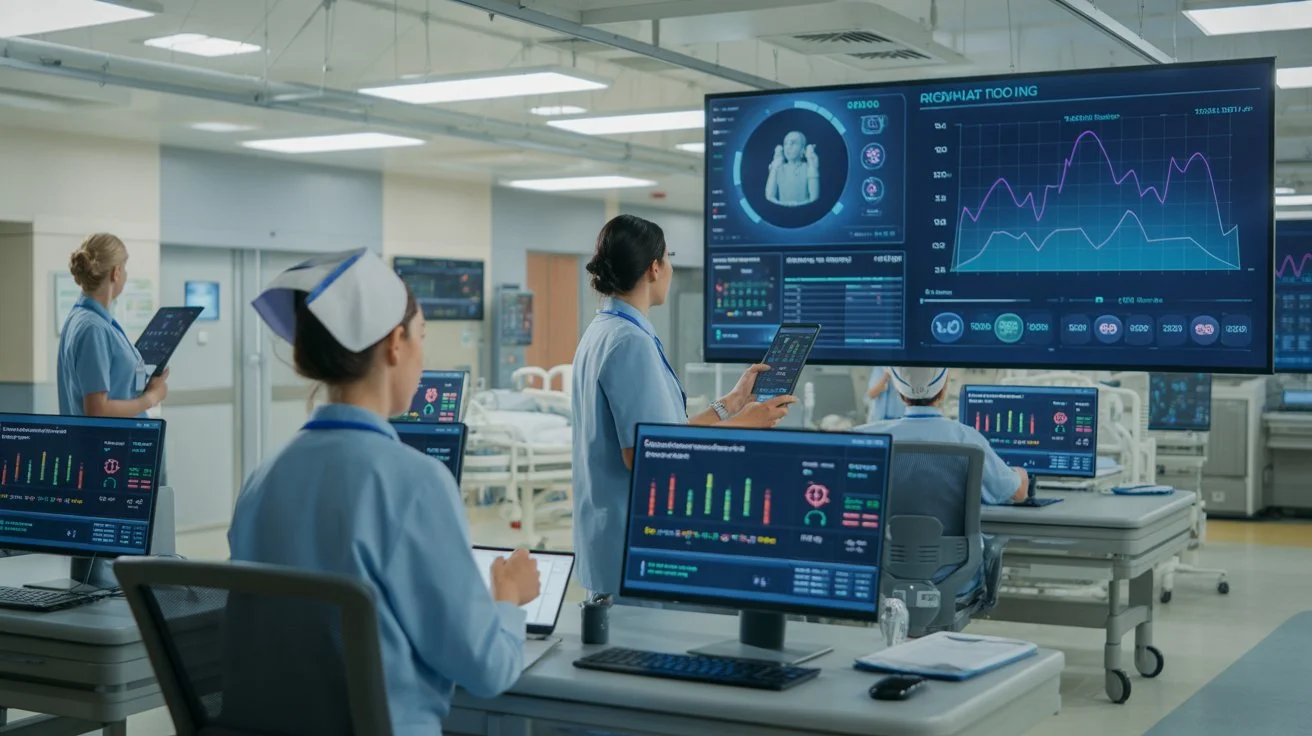
Operational Precision Through Predictive Dashboards
Predictive dashboards transform workforce data into a strategic asset.
By monitoring the Resource Optimization KPI, leaders like Tara Claudio, Director of Nursing Business Operations at HMH, have been able to provide managers with real-time visibility into who has yet to meet their FTE requirements.
This enables a “pre-post” process where holes are filled by existing staff, drastically reducing the reliance on premium pay.
Success Story: Hackensack Meridian Health’s 6.5% Efficiency Gain
The implementation of Smart Square at Hackensack Meridian Health serves as a definitive case study in operational precision.
Facing the challenge of a legacy system that was 20 years old and lacked self-scheduling capabilities, HMH launched a phased rollout of the predictive platform.
The Measurable Impact (2022–2023)
- FTE Leakage Reduction:
Through rigorous monitoring and standardized business rules, HMH reduced its leakage rate from 15% in 2022 to 8.5% in 2023. - Direct Financial Savings:
This 6.5% reduction in inefficiency translated to $616,000 in labor cost avoidance in less than one year. - Process Stability:
By consolidating 11 hospitals into one system, the network achieved enterprise-wide transparency, enabling dynamic deployment of “float pool” staff to units with the highest real-time demand.
This result was achieved without cutting services or staff. Instead, it reflected a human-centered approach to technology that empowered managers to practice “at the top of their license”.
Autonomy as the Antidote to Clinician Burnout
While the financial gains are primary for the C-suite, the reduction of FTE leakage has a profound impact on clinician well-being.
Burnout is often driven by limited voice in scheduling and excessive workloads.
By automating repetitive administrative tasks and providing mobile-first self-scheduling tools, systems like Smart Square give clinicians unprecedented control over their work-life balance.
When staff can build their entire monthly schedule in seconds and trust that the process is fair and data-driven, engagement and retention increase.
Conclusion: From Disparate Systems to Dynamic Staffing
Hospital FTE leakage is a symptom of a broader operational crisis—one born of fragmented data and reactive planning.
However, as the experiences of Hackensack Meridian Health, Bellin Health, and Temple Health demonstrate, this trend is reversible.
To reclaim the invisible budget, healthcare leaders must:
- Standardise business rules for staffing and incentives across the enterprise
- Consolidate fragmented point solutions into a single operations platform
- Leverage predictive analytics to move from a 30-day reactive cycle to a 120-day proactive horizon
By synchronizing the clinical workforce with real patient demand, hospitals can stabilise budgets, mitigate clinician burnout, and—most importantly—ensure their most valuable resources are always at the bedside where they are needed most.