The most accurate 30-120 day hospital staffing forecast platform: what actually works
Hospital administrators love talking about workforce planning. Most of them are still doing it with a spreadsheet and a prayer.
The gap between “we have a staffing strategy” and “we can accurately predict what we need 90 days from now” is enormous. And that gap costs money every single time a shift goes unfilled, a nurse gets mandated, or an agency call goes out at 11pm.
The good news: forecasting technology has caught up to the problem. The bad news: most platforms oversell what they can actually do.
Here’s what separates genuinely accurate hospital staffing forecast tools from the ones that look good in a demo.
Why 30-120 days is the window that matters
Scheduling today is a firefight. You’re reacting to callouts, scrambling for coverage, paying overtime you didn’t budget for.
Real workforce planning happens in the 30-120 day window. That’s far enough out to make meaningful decisions: hiring, onboarding, PRN pool development, contract negotiations with staffing agencies. Close enough that the data is still actionable.
Inside 30 days, you’re mostly reacting. Beyond 120 days, census and acuity data gets too speculative to build reliable shift-level projections.
The 30-120 day range is where hospitals either get ahead of their labor costs or don’t.
What actually drives accurate hospital staffing forecasts
Not all forecast engines are built the same. The platforms that consistently outperform on accuracy share a few things in common.
Patient census integration
A staffing forecast that doesn’t connect to patient volume data is just a schedule with optimistic assumptions baked in.
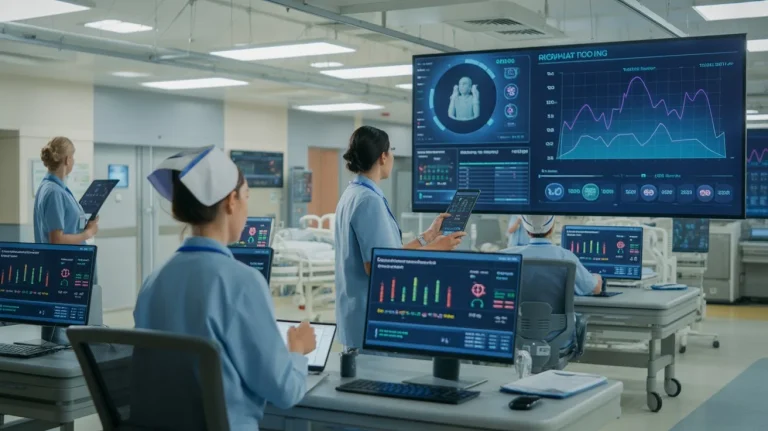
The best platforms pull historical census data by unit, day of week, time of year, and service line. They know that your cardiac unit runs 94% occupancy every January because flu season drives admissions. They build that into the projection rather than waiting for you to notice it’s happening again.
Some platforms also connect to admissions, discharge, and transfer (ADT) feeds in real time, which tightens short-range forecasts considerably.
Acuity weighting
Raw patient count is the wrong number. A unit with 20 post-surgical patients needs different staffing than a unit with 20 stable medical patients, even at identical census.
Platforms that incorporate acuity scoring (HPPD targets, care complexity indexes) produce forecasts that actually match what managers need on the floor. Ones that don’t produce headcount projections that look right on paper and fall apart in practice.
Staff availability modeling
You can’t forecast demand in isolation. The other half of the equation is knowing what supply looks like 60 days from now.
That means integrating PTO requests, known leaves of absence, historical call-out rates by unit and season, and credentialing or orientation timelines for new hires. A platform that only looks at demand-side data will consistently overestimate available coverage.
Rolling recalibration
A forecast built on January data that doesn’t update when February changes isn’t a forecast. It’s a guess that stopped listening.
The better platforms recalibrate continuously. Every new census data point, every approved leave request, every new hire completion date feeds back into the model and adjusts the 30-120 day projection accordingly. You see the forecast shift in real time as conditions change.
The platforms worth knowing about
Smart square (Hackensack Meridian / API Healthcare)
Smart square hmh is one of the most deployed workforce management systems in U.S. health systems. Its forecasting module connects census data, historical staffing patterns, and float pool availability into projections that managers can act on.
The meridian smart square hmh implementation is notable because it covers a large multi-hospital network, which means its forecasting model is trained on significant volume. More data generally means better pattern recognition.
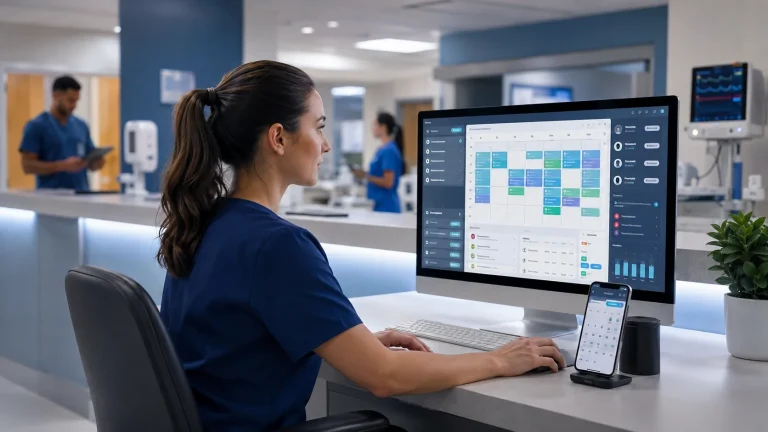
Staff access their schedules and availability through hmh smart square login, and managers see the demand-side projections in the same interface. That integration matters: when the tool your managers use daily also surfaces the forecast, adoption is higher and the data loop stays tight.
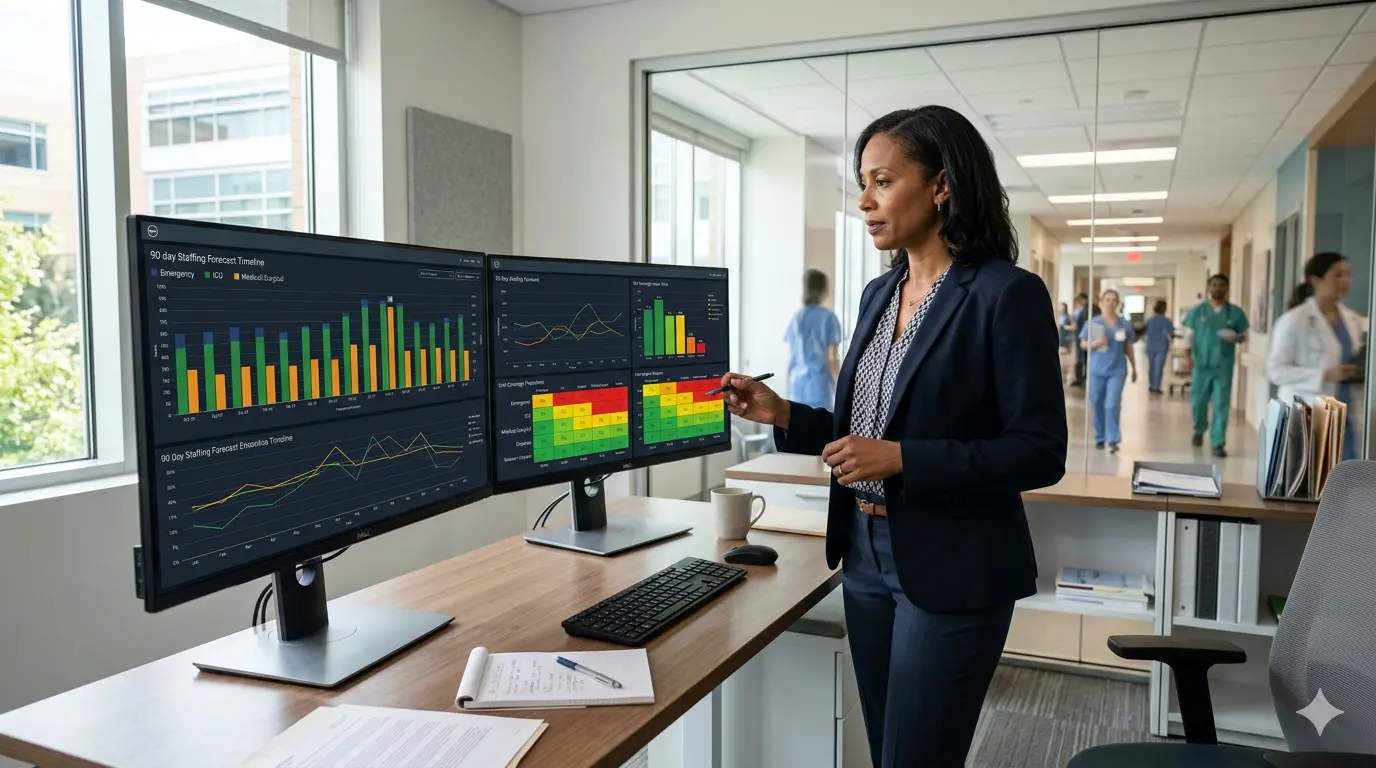
The smart square hmh login dashboard surfaces staffing gaps in the 30-60 day range with enough clarity that coordinators can act without pulling separate reports. For 90-120 day horizon planning, it connects to workforce analytics modules that sit alongside the scheduling view.
For health systems already running hmh smart square, the forecasting capability is largely already there. The question is usually whether the team is trained to use it at the 90-120 day horizon or only using it for near-term scheduling.
Infor Workforce Management
Strong on the analytics side. Infor’s acuity-based staffing model is one of the more sophisticated in the market, particularly for systems with complex service line mixes. It integrates with major EHR platforms, which matters for census data quality.
The learning curve is steeper than some alternatives. Implementation timelines tend to run longer.
Kronos (UKG Workforce Dimensions)
Now operating under the UKG brand after the Kronos/Ultimate merger. Widely deployed, mature product. The forecasting module is solid for systems that need 30-60 day visibility. The 90-120 day horizon is less refined than purpose-built workforce planning tools.
Strength is in the integration ecosystem. If you’re already on UKG for time and attendance, extending into forecasting is relatively low friction.
Shift Wizard / ShiftMed
More focused on the scheduling and shift-fill layer than deep census-driven forecasting. Better suited to facilities that have solved the demand-side modeling elsewhere and need a strong staff-facing scheduling and communication layer.
Not a primary recommendation for the 90-120 day forecast problem specifically.
What to look for in a platform evaluation
If you’re actively evaluating platforms, a few questions cut through the marketing noise quickly.
How does the forecast model handle seasonality? Ask for specific examples. “We account for seasonal variation” is vague. “The model adjusts December projections based on 3 years of historical December census data by unit” is a real answer.
What data sources feed the demand forecast? If the answer doesn’t include census, ADT, and acuity data at minimum, the forecast ceiling is low.
How often does the model recalibrate? Daily recalibration is the standard you want. Weekly is acceptable. Monthly means you’re working with stale projections most of the time.
Can managers see 90-day forecasts in their daily workflow? A forecast that lives in a separate analytics dashboard nobody opens is not a working forecast. It needs to surface in the tool managers actually use.
What’s the variance on historical forecasts? Ask them to show you actual vs. predicted staffing demand on past quarters. A platform confident in its accuracy will show you this data. One that hedges on this question is telling you something.
The implementation problem most hospitals don’t plan for
The platform is maybe 40% of the solution. The other 60% is data quality, workflow adoption, and change management.
A hospital with 2 years of clean census data, consistent acuity documentation, and a scheduling team that actually uses the platform daily will outperform a hospital with a better platform and messy data inputs every single time.
Before evaluating platforms, it’s worth an honest audit of what you’re working with. How complete is your historical census data by unit? Are your acuity scores documented consistently? Do your managers currently look at any forward-looking staffing data, or are they heads-down on next week?
The answers tell you whether you’re buying a platform or buying a platform plus a 6-month data cleanup project.
What accurate forecasting is actually worth
Run the math for your own organization, but rough benchmarks from health systems with mature workforce planning programs suggest a few consistent numbers.
A 10-15% reduction in overtime hours is achievable in year 1 for systems moving from reactive scheduling to 60-90 day forecast-driven staffing. On a 500-nurse hospital payroll, that’s $2-4 million annually depending on your market’s wage rates.
Agency and travel nurse spend typically drops 20-30% when internal staffing decisions are made further in advance. The economics of agency nursing are brutal precisely because you’re paying a premium for speed. Remove the urgency and you remove most of the premium.
Administrative time savings are real but harder to quantify. Scheduling coordinators report spending 30-40% less time on reactive adjustments and shift-fill calls when they’re working from a 60-day forecast rather than a 2-week schedule.
The honest summary
No platform produces a perfect 120-day hospital staffing forecast. Census is partially unpredictable. Staff circumstances change. Pandemics happen.
The goal isn’t perfect prediction. It’s reducing the gap between what you planned for and what you actually needed, consistently, over time.
Smart square hmh and its competitors in the enterprise workforce management space have closed that gap significantly for the health systems using them well. The word “well” carries a lot of weight there. The platform matters. The data quality matters. The adoption matters.
Get all 3 right and the 30-120 day forecast stops being an aspiration and starts being how your staffing team actually operates.
That’s when the overtime numbers move.