Smart Square vs QGenda vs UKG: Ultimate 2025 Comparison
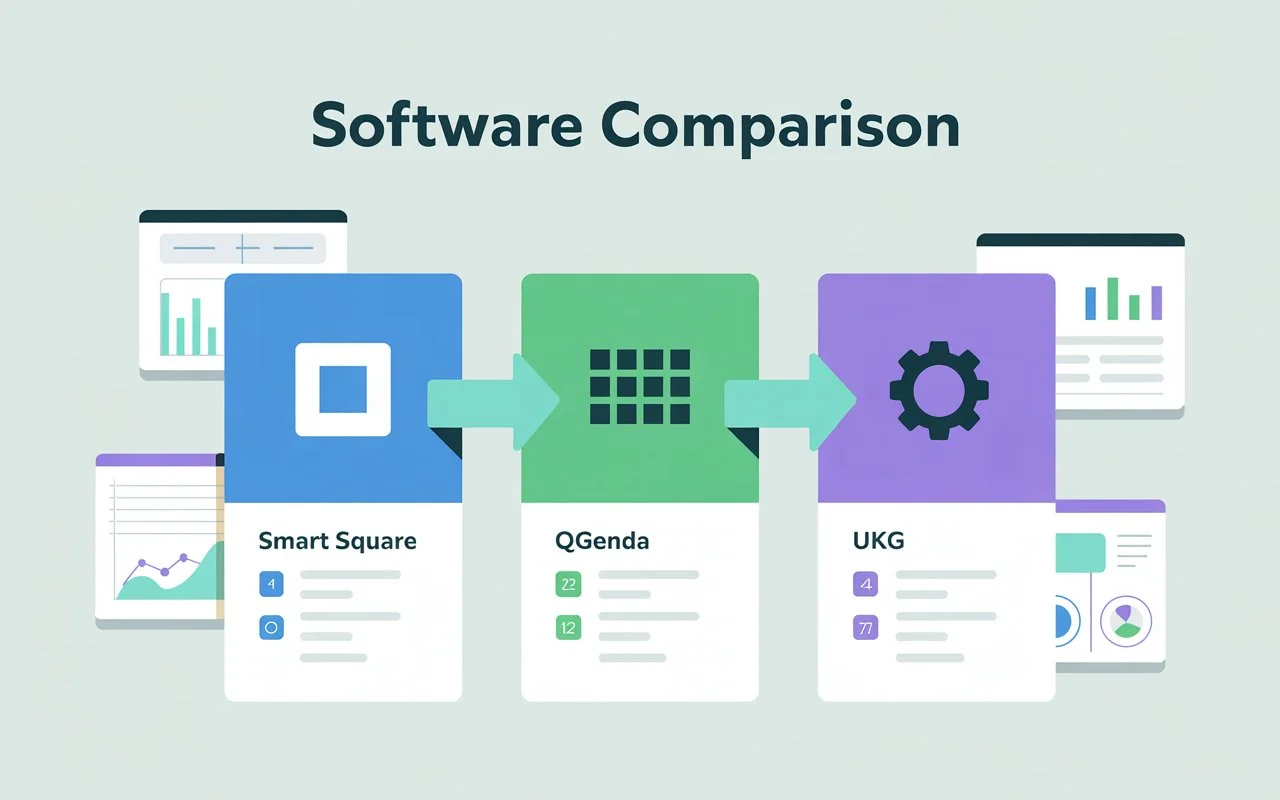
Choosing the right scheduling and workforce management software is critical in healthcare. In this article, we’ll dive deep into Smart Square vs QGenda vs UKG, comparing features, strengths, weaknesses, and ideal use cases. At the end, you can download a PDF comparison cheat sheet to reference later or share with decision-makers.
📋 Why Compare Smart Square, QGenda & UKG?
- All three are major players in healthcare workforce and scheduling software
- Decision makers frequently search for alternatives and comparisons
- A detailed comparison helps your audience choose wisely and positions your site as authority
- This type of content tends to attract backlinks (vendors, HR blogs, hospital IT decision-makers)
🏥 Overview: Smart Square, QGenda & UKG
Smart Square (by symplr / formerly AMN Healthcare)
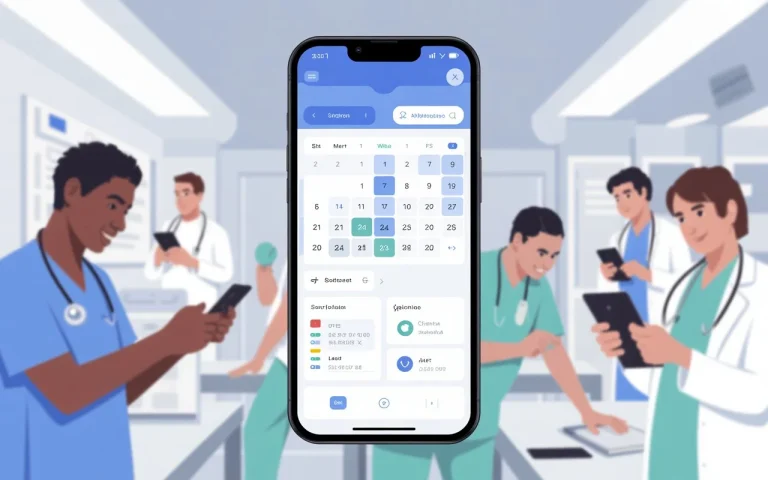
Smart Square is a scheduling and staff-planning solution focused on healthcare environments. It uses predictive analytics, open-shift management, integration with EMR systems, forecasting, and offers strong compliance & reporting. Capterra+3symplr+3symplr+3
In 2025, Smart Square was acquired by symplr, expanding its enterprise capabilities across operations. symplr+2Clearlake Capital Group+2
Smart Square is also recognized in the Best in KLAS category for scheduling for nurses & staff. symplr+1
QGenda
QGenda is purpose-built for provider and clinical scheduling in healthcare, with modules for automated scheduling, credentialing, coverage management, and real-time scheduling adjustments. G2+3AVIA Marketplace+3Subscribed.FYI+3
It is praised for its mobile experience, user interface, and healthcare-specific rules. G2+2Subscribed.FYI+2
UKG (Ultimate Kronos Group)
UKG is a broader HCM and workforce management platform that includes scheduling modules. It offers integrated solutions for HR, payroll, talent, time & attendance, and workforce scheduling. AVIA Marketplace+3SelectHub+3G2+3
In comparisons, UKG often wins on comprehensive HR features, but some users find the automated scheduling module less intuitive compared to specialist tools like QGenda. G2+1
✅ Feature-by-Feature Comparison
Here’s a side-by-side look at key features across Smart Square, QGenda, and UKG:
| Feature / Capability | Smart Square | QGenda | UKG |
|---|---|---|---|
| Core Focus / Strength | Healthcare scheduling with predictive analytics, integration | Clinical scheduling, provider-centric, rules engine | Full HR / HCM suite with scheduling built-in |
| Predictive Forecasting & Analytics | Strong capabilities (forecasting over 120 days) Capterra+2symplr+2 | Moderate, some rule-based forecasting | Good analytics but broader focus |
| Scheduling Automation & Rules Engine | Supports rule automation, open-shift management Software Advice+2symplr+2 | Highly customizable rule-based scheduling, often praised for flexibility | Available but sometimes considered less intuitive than specialized tools G2+1 |
| Mobile Experience | Has a mobile app (Smart Square Go) with scheduling & alerts Google Play+2AMN Healthcare+2 | Strong mobile access, praised in user reviews G2 | Robust mobile capabilities in broader UKG platform |
| Integration & Ecosystem | Integrates with HRIS, EMR, payroll systems GetApp+2Capterra+2 | Integrations with clinical systems, EHRs, credentialing systems | Deep ecosystem ties with HR, payroll, benefits modules |
| Compliance & Credentialing | Good (designed for healthcare) | Strong healthcare credentialing modules | Strong compliance in HR/ labor law domain |
| Ease of Use / UI | Well-regarded in healthcare settings | Often praised for intuitive UI G2 | Powerful, though some users cite steeper learning curve in scheduling module G2+1 |
| Support & Customer Success | Backed by symplr’s enterprise capabilities | Strong support reputation G2+1 | Large enterprise support, but can be less specialized in scheduling support |
| Pricing Model & Scalability | Healthcare-oriented pricing (enterprise, module-based) | Modular pricing often per provider / user | Suite model; scheduling is part of larger HCM cost |
| Best Use Case / Ideal Users | Hospitals & health systems needing healthcare scheduling first | Clinical groups, medical centers, provider-heavy organizations | Organizations needing unified HR + scheduling across many functions |
⚖️ Pros & Cons of Each System
Smart Square
Pros:
- Strong predictive analytics and forecasting tailored to healthcare
- Deep integrations with hospital systems
- Good for larger health systems with complex scheduling rules
- Recognized industry reputation (Best in KLAS) symplr+2symplr+2
Cons:
- May lack breadth of HR or payroll features found in full HCM suites
- Learning curve for rule configuration
- As part of a larger suite (symplr), there may be bundling that increases cost
QGenda
Pros:
- Highly configurable and focused on clinical workflows
- Intuitive UI + mobile experience praised by users G2
- Strong support for credentialing & compliance
- Scalability in provider scheduling
Cons:
- Less robust in HR/payroll functions compared to UKG
- Cost can escalate with many modules
- May need integrations for full HR capability
UKG
Pros:
- Complete HR + scheduling platform, reduces vendor fragmentation
- Strong in payroll, benefits, workforce analytics
- Enterprise-grade support and stability
Cons:
- Scheduling module may not be as specialized or intuitive as QGenda for healthcare clinics G2+1
- More expensive upfront for smaller units that only need scheduling
- May include excess features that small units don’t need
🏁 Which One Should You Choose?
Your best choice depends on your priorities:
- Need deep healthcare scheduling, forecasting, and integration with hospital IT?
→ Smart Square is a strong fit. - Focus mostly on provider scheduling, clinical workflows, and intuitive UI?
→ QGenda may outperform in that niche. - You want an all-in-one HR + scheduling + payroll platform?
→ UKG might make sense if you value consolidation and efficiency.
Often, large hospital systems adopt Smart Square for nursing and staff scheduling, and may use UKG for the broader HR suite; QGenda is often preferred in more specialized clinical or physician scheduling contexts.